
 As a way to tell what to expect from a beer, color can sometimes be misleading. On this occasion, however, my friend happened to be exactly right. Having just finished pouring a straw colored, golden, clear brew into my glass, he had turned to notice it – and immediately exclaimed “LAGER? Lager?? Is that a…”, his voice heightened to a level normally reserved for, say, archeologists who have just uncovered a lost city somewhere in the desert. A quick examination of the bottle was also needed. Knowing how much I enjoy craft and microbrewery beer, his excitement was quickly hit with new found puzzlement – the bottle clearly labeled as coming from a craft brewery in Michigan. Knowing what was sorting its way out inside his head, I tried to help out. “Yes, it’s a lager. I DO drink lagers you know. And yes, craft breweries DO actually brew lagers, not just ales”. To this day, I’m still not sure he completely believed me.
While my friend still could’ve been very wrong – that golden, clear brew could’ve been any of a number of types of ales – I do completely understand his surprise. After he and I agreed that not all ales are darker beers, debunking myth number one, something still didn’t add up for him. Years of tv and print ads featuring the historically market dominating pale yellow lagers from the big boys of brewing has inevitably and understandably caused a knee jerk reaction that any beer with such an appearance is likely their product, at least to the average Joe on the street. But my friend knew I primarily drink craft brewed beers. It’s simply what I prefer. But to those folks, like my friend, who are either not interested in craft beer, or who are and are just getting into craft beer, it can often seem that all craft and microbrewed beers are ales. To my friend, that my lager came from a craft brewery seemed about as unlikely as me declaring one day I had decided to train to become a bullfighter. Trust me. The look on his face told me so. Yes, some craft breweries strictly brew ales, and most others do tilt their selections towards them. Most of these folks are often surprised then, as my friend was, to find out that craft breweries in fact do make pale colored lagers. At first, I smiled and considered it a moment in which a second beer myth had been disproven, all in one myth busting swoop. But along with that myth solved came one solid beer truth. The deeper you look into a particular beer “style” – even one clear enough to see through – the more there is to think about and learn.
Yes, it’s true. What followed the interaction with my friend was plenty of thought about…pale lagers. Did the room just empty out? Tap, tap, tap. Is this thing on?? After all, this wasn’t the latest bourbon barrel aged Belgian tripel or the biggest oak aged stout that’s sweeping the craft beer world. Of course, my reflection began in that short but informative conversation with my friend. Along with his moment of discovery came a hint of curiosity. He was, at the time, a purely macro beer drinker, but the thought of a similar looking lager to the Coors Light which was in his hand at the time was enough to ask for a taste. This got me thinking about that impossible to answer but so tempting to ask question – what are the best “gateway” beers into the craft beer world, if there are such a thing? I looked at my Bells Lager. Is this it?
 To even try to answer that question, you’d have to know exactly what “this” was. While there are plenty of interpretations of the ultimate in pale, golden lagers – the Pilsner – “this” was not one of them. They are sometimes called Premium Lagers, American Pale Lagers, or lastly and possibly more accurately, “all malt lagers”. When it comes to understanding these beers, that last term might be the most descriptive. It’s also the one which, for the same reasons, has the power to start all sorts of heated arguments and the type of name calling usually reserved for opposing fans of rival hockey teams, or English soccer clubs, or opposing sides of Aniston vs. Jolie. Anyhow, you get the point.
The difference in beers like the Bells Lager I was drinking at the time and macro brewery produced pale lagers tends to lie primarily in the grain used in the beer. Many, but not all, of these all malt lagers use only barley, while most, but not all, macro brewery produced beers use a combination of barley along with grains such as rice and corn, commonly referred to as “adjunct” grains. Their usage, and the flavors they tend to give beer, is a point of contention among beer folks worldwide. There is a popular opinion among many brewers and especially craft beer fans that barley is the only way to go, and they shudder at the thought of having anything else in their beer. The common train of thought is that the use of these anything other than barley degrades the overall quality of the beer, and produces flavors which are generally undesirable. It even shows up in the popular “I am a craft brewer” video that is often used to promote craft beer, showing a few brewers who exclaim “I don’t use corn in my beer”. Who knows where this thinking began, but somewhat surprisingly, it seems like it might be starting to change, at least in terms of using rice. One example that’s been in the works for some time is Great Divide’s Samurai, an unfiltered blonde style ale that features rice rather prominently. Stillwater Artisanal Ales, a pretty much one man craft operation which produces primarily Saison style beers, has produced an ale called “Premium”, using both corn and rice. In a recent interview with dcbeer.com, Stillwater’s Brian Strumke summed up the adjunct argument rather succinctly, as he was speaking about Premium: “[it was] a very serious proclamation that it’s not always the ingredients that make beers inferior, but often the technique and approach to its construction.” While these examples are both ales and not lagers, considering the heavy stigma that surrounds the use of corn and rice at all, any attempts to do so are absolutely worth noting. It is within the world of pale lagers that the usage of such grains are known for best, after all. Examples such as Stillwater’s Premium and Great Divide’s Samurai could signify that a change in the overall attitudes towards these grains is coming.
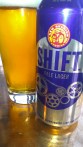 Perhaps it was this difference in taste that made my friend re-think his curiosity. Because as it turned out, my Bells Lager wasn’t exactly to his liking. But if these lagers aren’t the best doorway to craft, and since most would agree they are not the latest craft beer craze, where exactly do they fit in? I remember reading a post on a beeradvocate.com discussion board one day that someone had “rediscovered” this type of beer after months of being caught up in the big beer frenzy. Like so many folks out there, week to week he waited to see what the latest, biggest Russian Imperial Stout or most extreme IPA would be. Then he retold the story of having spent the day at a nearby lake, enjoying good weather with friends. The lower abv and lighter tasting lager he had picked up was nothing short of both perfect for the day and a refreshing change from the world of extreme, over the top tastes he had gotten used to. True, what craft brewers can and will do with beers to explore and stretch the boundaries of flavor, like aging brews in pinot noir casks or in bourbon barrels, is worthy of getting worked up over from time to time. These beers are true tasting ‘experiences’, their complexities and layers of flavor something to be marveled at to be sure. But it goes without saying that there is room for both those larger than life beers and those that exist on a somewhat simpler level. And a relaxing day at the lake or the beach – did someone say lawnmower beer? – are only two examples of where these lagers might “fit in” rather perfectly.
Surprisingly, these beers might also find themselves in another, far more publicized spot, if one current trend in craft beer remains. Even though they may pale – pun intended – to the latest black as night, world class Russian Imperial Stout, given some time, Premium lagers might find themselves fitting in as a part of the next big craft beer craze after all, one that might’ve truly got its start in early April. A year or so from now, we may look back on April 7th, 2012, as a date to remember. The day had been designated “Session Beer Day” by well known beer blogger and session beer champion Lew Bryson to celebrate the growing stir in the craft beer world around such “session strength” beers. Basically, session beers are traditionally described as low alcohol content beers that could be consumed over a “session”, or a time spent with friends at the pub, for example, without them putting you under the table. Although the level of alcohol which exactly defines a “session” beer is a hot topic of debate surrounding these beers – and is one which some folks take far too seriously – Bryson and ratebeer.com say it’s under 4.5%, beeradvocate.com under 5%. Regardless, Session Beer Day provided evidence of the heightened interest, as response to the day seemed to be well received from craft breweries to drinkers across the nation. Where does my Bells Lager of the Lakes fit in then? It did so very well, in my opinion – flavorful, and at least within the higher range of things, at 5.0% – just inside the session beers’ slightly blurry lines of definition.
 I’m still not sure which of us experienced more amazement that day. Was it my friend, upon seeing me drinking a pale colored lager, or myself, as each new topic to consider surrounding that beer surfaced for the rest of the afternoon. All about a beer that hardly gets much consideration at all. From how it busted a couple beer myths and helped fuel curiosity in a non craft drinker to how a primary difference between it and macro lagers can stir up heated debate, Premium lagers like my Bells and others, such as Full Sail’s Session and New Belgium’s Shift, can prove to be much more interesting than first imagined. They can be a welcome change from the flavors of the big beers that usually are found sweeping the beer world, although both have their time and place. Who knows, they could even have their own role in the next big craft beer frenzy. After I had reflected on how much a seemingly simple beer could bring to the table, one slightly more modest thought remained. I opened another one later that day, and while sitting outside on that warm summer evening, I was immediately reminded of just how flavorful and refreshing beers like that can be. And right then, that’s all I needed to know.
WHAT TO EXPECT: Premium Lagers are often crisp, low to moderately hopped, can be slightly malty sweet, perhaps have slightly grassy tastes but often do feature a light biscuit like bready-ness to them. Well done examples have just enough body to them while not being overly thin. They are clean tasting, refreshing, and easy to drink, and as mentioned in the post above, many fairly low in alcohol content, upwards of 5%, although a few examples can range to 7%.
A FEW EXCELLENT EXAMPLES: Do not miss Full Sail’s Session Premium Lager (red label), Bell’s Lager (Lager of the Lakes), New Belgium’s Shift (available in great looking tall boy style cans, of all things!), Heavy Seas Brewing’s Classic Lager, Legend Brewing’s Legend Lager.
 Steal the pint nights. Go ahead, admit it. When such events show up on the upcoming calendar of events, the typical thoughts can range anywhere from the opportunistic and slightly mind expanding “hope there’s a few beers there that I haven’t tried” but for most, eventually come to also include the similarly opportunistic but only beer-glass-collection-expanding “YES – free swag!” But how about being truly educational? Just imagine if this had been one of your course descriptions in your college course catalog:
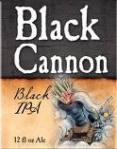 Our second semester of sorts will be what Heavy Seas calls “extension of our Loose Cannon style brewed with black malt”. A mix of two worlds for certain – a darker, malty beer merged with an IPA – Black IPAs resulted from the constantly open imaginations of craft brewers. Heavy Seas’ version of the “style”, their Black Cannon, is based off of their Loose Cannon and brewed with, of course, dark, black malts. In this beer, the malts make for a slightly smoky, slightly charcoal like flavor with just a shade of bittersweet chocolate, and it somehow all seems to accompany and highlight a citrusy character from the hops quite well. Both take their turn being at the forefront of the beer, and the following low bitterness on the back end make it a beer that has a lot going on but is very easy to drink.
 If you’re a true hophead, and I mean a purist, you already know what it means, or at least what it tastes like. Dank. It’s a popular term used to describe a particular hop aroma and flavor in certain beers, although the exact definition of what truly causes a beer to smell or taste this way differs slightly from one person to another. There are even one or two opinions out there that challenge the using the word as a beer descriptor at all, considering its use in describing the aroma of another popular flowering plant from the same family as the hop. But it’s just too accurate of an adjective of hoppy ales to put down. The purists – not the stoners – know it. Still, what does it mean exactly?
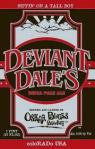
 But don’t take it from me. Few beers hit these notes as perfectly as one particularly funky, and dank, IPA that has built up quite a bit of buzz in the last several months. This weekend, Deviant Dales IPA from Oskar Blues Brewery in Colorado will be taking its place among the taps at Local Roots Restaurant here in Roanoke. Reportedly, it’s an elevated and extremely well dry hopped version of their Dale’s Pale Ale, and is not to be missed. Let it warm just a bit for all the flavors to uncover themselves. All the elements are there – piney, earthy, resinous hops flood both the aroma and the flavor in this deliciously complex and flavorful beer. In lesser hop bombs, it can sometimes be easy to pick out the moments at which each hop characteristic runs across your tongue. In Deviant, you’ll taste its slight pine, puckering grapefruit and bitter rind, big herbal earthiness, and resinous hop flavors as they are occur all at once, not unlike funk band instrumentalists going on their own solos but staying within a groove, building one heck of a deep, soulful blues jam, all held in check by a bass line of perfectly placed deep caramel malt. This malt and the carbonation give the beer a wonderful feel and help those hoppy – dank – flavors coat the mouth, making sure that the raw satisfaction lingers for some time. As it finally begins to show signs of fading from your taste buds, you’ll most likely say it, as my friend did. And even if you don’t, one thing’s for sure. As a grin likely starts to unfold on the edge of your slightly puckered mouth, you’ll definitely feel it.
 First, Blue 5 Restaurant expanded their almost completely craft beer selection from sixteen to a mouth watering forty six taps on hand. This was almost immediately followed by bringing in some of the most buzz worthy craft beer from across the country, such as Avery’s Maharaja Imperial IPA and annual releases like Foothills’ Sexual Chocolate stout. So what’s next on the chalkboard of beer related projects for the restaurant? Did someone say “beer garden”?
 Yes, this Saturday, April 21st, Blue 5 will create, in the words of manager Chris Coleman, a “pseudo” outdoor beer garden which will coincide with the second annual Roanoke Twilight Criterium bike race, once again running through the streets of downtown. According to Coleman, it will be located directly in front of the restaurant, from which turn one in the .60 mile race will be easily within sight. Making the event even more enticing, race sponsor and regional brewery Devils Backbone (Nelson, Rockbridge Counties) will be the featured brewery. Along with their popular Vienna lager, the brewery is apparently bringing a few of their other fine brews, none have appeared in Roanoke so far. The list includes their Gold Leaf lager, Maibock, White Stag IPA, and possible first choice for their upcoming “Trailblazer” limited release series, their delicious Begian Congo pale ale.


 The Beer Road