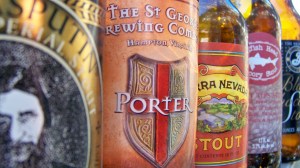
 Imagine going to a beer tasting at which not a single bottle is opened. Not a single glass is filled, not a single drop poured. As you approach the table, instead of a taste, all you receive is a simple pitch: “Here is the beer I’m promoting tonight. It’s a stout.” The entire tasting goes exactly like this, and not a sip is sipped. Just how disappointed would you be? I think this might have actually been a nightmare I once had, from which I woke up screaming of course. Aside from that however, this tends to happen a little too often, except not at tastings. No matter how well intended, we all can sometimes get too caught up in trying to describe a beer, to ourselves for memorization, or worse, to others, by starting and ending with just the “style” the beer is supposed to be, as if the standard definition associated with that style is enough, or what’s ultimately important. It’s only natural to look for clear cut definitions when trying to get your mind and taste buds wrapped around one beer or another, but when it comes to beer, or plenty of other man made creations, labels and the standard definitions they come with can only go so far. Often, with beer, they can be about as clear as the stout that didn’t get poured. When it comes to beer, there is far too much overlapping between “styles” to spend too much time on names and quick definitions. And two “styles” in particular are famous for blurring the lines between them, the stout and the porter.
So what IS the difference between a stout and a porter? They have different “names”, so they must be, well, different – right? It’s an especially common assumption among newcomers to the dozens of beer styles that are actually out there in the world. Those new to these two styles often go looking for some sort of clearly defined line between them, and why a beer is called one or the other. Articles and countless numbers of internet discussion boards are full of attempts to separate what after a while seems pretty inseparable. Definitions of the two on beer websites are often very similar. Read enough beer reviews of either and you’ll think you’re reading reviews of the same kind of beers, since the same adjectives to describe them keep coming up over and over: roasty, chocolatey, smokey, creamy, coffee like, and on and on. When it turns out that they aren’t that different at all, heads begin to spin a little, and that’s understandable. Towards the end of one particular lengthy and seemingly endless debate, I finally found the truest and thankfully simplest summary: the name that ends up on the label, be it “stout” or “porter” – can be simply whichever the brewer wants to call it. Still, for many, it can be a little frustrating, but there are definitely a couple lessons to learn here.
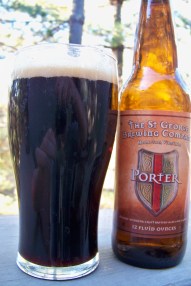 No one can quite agree on a specific point at which the beer we now know as a “stout” came into existence. But we do know that the stout grew out of the Porter – the former simply a stronger, or more “stout”, version of the latter. No one may know exactly when the adjective “stout” began to fade from the description of the Porter and started to evolve into a style of its own, but one popular reference point involves the Guinness Foreign Extra Stout. At one time a higher alcohol and more hopped up version of their Extra Stout Porter, it is perhaps the most well known omission of the word “Porter”. So what we call the beer today that so many imbibe with gusto while wearing ridiculous green hats on St. Patrick’s Day and probably feel they know well was simply a more “stout” version of, and basically an adjective attached to, a beer that so many today probably think they’ve never tried. Aha – right?! There is a point to all the porter versus stout discussion, there’s a whole history lesson. But the history of these two only shows us how much one style of beer can be so similar to another – practically putting it in neon lights for us – and how getting caught up on identifying a beer as one style or another can be, at the very least, shortsighted.
Yes, today, it’s true that craft brewers are doing some amazing things with some of these beers, adding all sorts of ingredients to them that add complexity and layers of flavor. It’s one of the most popular crazes in craft beer – adding coffee, vanilla bean, and the like to create the next big beer, and more often than not, the “style” of beer these are added to are, at least according to the brewer, stouts. But on a more basic level, without these ingredients, we’d still find our same dark, delicious stout that perhaps tastes like a porter, or is it a porter that tastes like a stout? It’s an odd division of the two styles that’s happening here, finally – a dividing line between the two, but one that’s more imposed by these additional ingredients which have been infused within the beer than anything that actually “makes” the beer itself. The effect of this is that the two beers are still not that different at all, but it’s almost as if the name “porter” has been unofficially picked as the one most likely to “stick to the traditional recipe no matter what” version, and the “stout” is the crazy cousin who sometimes shows up at the party wearing the lampshade over its head. The beers are still tied to another, but one is expected to go nuts occasionally. In the end, these two perfect examples of the overlapping of one beer “style” into another remain intimately intertwined.
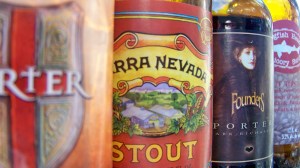 Beer styles and names certainly do serve a purpose. A stout is obviously worlds apart from a pilsner. There is a need for description, especially when learning about something new, and the beer world has plenty of variety to try to sort through. But it’s all too easy to get hung up on style names and the standard definitions they come with and be satisfied, in part or in whole, with just that. Too often, conversations in beer circles tend to revolve around the style a beer is supposed to be instead of the beer itself. At the least, it’s a waste of energy (and time you could be tasting more of it, by the way), but at the worst, it can cause conclusions to be drawn about one beer or another without taking into consideration what’s truly important – the beer that’s in the glass. What’s important to learn is to reach a point where when you’re tasting beer, you might reference a style briefly, but give yourself room to then let it go somewhat. Within the dozens of beer styles out there, again, there is plenty of overlapping – none more resident in our porter and stout – and that’s to be expected. It’s very often a case of close brothers or sisters, or at least distant cousins, with plenty of family resemblance. It happens elsewhere too – close your eyes and grab what some call an “imperial red ale”, and then an “IPA”, and see if you can tell which is which. A recent discussion board I was reading compared barleywines to double ipas, and for kicks, look up munich dunkel lagers, then type in schwarzbiers, and see if google doesn’t want to put a “vs.” between them.
 So it seems within our two closely related styles, the porter and the stout, and all their commonalities, you find not only a rich history lesson, but a bit of a lesson on experiencing new things in general, or at least new beers. As always, beer “styles” are merely guidelines, but the real fun is tasting, and taking, each and every individual beer at its own worth. Stouts, porters – don’t dwell too long on which is which. And if you happen to wake up screaming from a beer tasting nightmare where nothing is being poured, calm down, and go crack open a good stout – or porter. They make absolutely perfect night caps.
Posted in The (Beer) Road Less Traveled - Getting Into Better Beer.

 The question begins to stir in your head, I know – should I just go ahead and take vacation the first week of February? In what has become nearly a week’s worth of events to celebrate the anticipated mid February distribution of Devils Backbone beer from the brewery’s new location near Lexington, Local Roots Restaurant will get things rolling with a beer dinner featuring the brewery on February 8th. The Grandin Road area restaurant is known for dedicating its entire draft line-up to craft beer, often with a nod towards regionally or Virginia based breweries. Events begin with a sneak preview event at Blue 5 on the 19th of January, then heat back up with the Local Roots dinner, and continue through the end of the week, including stops the Salem Macados location, the Market Building downtown, and Buffalo Wild Wings in Roanoke County.
 Tickets for the beer dinner with Devils Backbone are not yet available to the public, yet the restaurant is tying the event to the planned introduction of its Local Roots Beer Club on January 4th. Club members will be able to purchase tickets to this and other future events before they are made public, and will also be able to take advantage of a $5 sampling of all eight of the restaurants’ tap selections during any visit to the restaurant. Previously, the specially priced sampling was only available once a month. Membership will be $5 and will also include food specials as well.
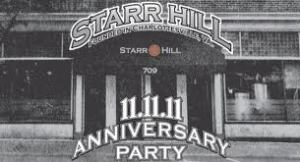 Anniversaries naturally lend themselves to healthy doses of reflection. Where you’ve been, where you’re going, where you are now. Tomorrow, Virginia’s Starr Hill Brewery will be celebrating their 11th anniversary, on the appropriate date of 11/11/11. Looking back, I can personally recall a particular, if not somewhat fuzzy memory from roughly three years ago in which Starr Hill makes an appearance, with no small amount of personal importance attached. Long before the lure of craft beer had fully taken hold of me, but with a curiosity beginning to slowly stir within, I had noticed Starr Hill Brewery’s beers on grocery stores shelves – their distinctive circled star logo is still hard to miss today. Always one to support the regional and local, and knowing that the brewery was from Virginia, eventually, curiosities led to actual purchases, and the brewery’s “Jomo” Lager was one of the first microbrewery beers I tried.
 But three years ago, I was just getting started. Starr Hill had been brewing for several years, had become well established in the region, and had since moved from a downtown Charlottesville location to a larger production facility in nearby Crozet. Their beers had already gained plenty of fans – their Amber Ale, the Dark Starr Stout, and the Jomo. Before the relocation, the brewery shared their address with the legendary music hall of the same name, and I can only imagine their reputation for good beer spread easily on the words of visiting musicians. Starr Hill’s selection would grow, from their Northern Lights IPA to their Hefeweizen, “The Love”, all the way up to the most recent seasonal “Boxcar”, the brewery’s pumpkin Porter, and their fairly new Imperial IPA “Double Platinum”. Over this past summer, Starr Hill also took a stroll down (very distant) memory lane and brewed a beer based off of a Thomas Jefferson recipe called Monticello Reserve. Over the years, Starr Hill has earned numerous awards at the Great American Beer Festival and the World Beer Cup.


 The Beer Road