 Fall is coming. At least the calendar says so. If you look hard enough, you can see a few signs, here and there. Along the outermost edges of trees, leaves have begun to redden, a chill is just beginning to sneak into the evenings, and then, there are the beer store shelves. For those of us who look forward to the annual reappearance of a particular style of beer each fall, we can tell you exactly what time of year it is without problem. Each year, around the beginning of September, Oktoberfest style beers will appear to begin their roughly two month long run of seasonal availability that many of their fans welcome as if a beloved family member has come for their yearly holiday visit. Beginning when we first see those familiar bottles picturing armies of beer stein armed bar maids, many folks suddenly have the giddy kind of joy more commonly found on children’s faces on Christmas morning – long outgrown train sets, now, it’s good beer – and then assured to us in that first, satisfying sip, Oktoberfest beers have a familiar, comforting flavors their fans look forward to each year. Or maybe it’s the beer’s association with one of the biggest parties on earth, and who doesn’t want to be a part of that. Either way, those of us who enjoy Oktoberfest beers each year generally know what to expect. No mind blowing complexities here, these lagers make up in their rich, somewhat bready, toasty, malty goodness what they might lack in shock value, and that’s perfectly ok. Then it’s safe to say that we know all we need to know about these beers well, and that we have this style nailed down, right?
 When it comes to beer styles and their accompanying histories, nothing is ever quite “nailed down” though. No major topic in world lore truly is, of course, and Oktoberfest style beer is no different. For fans of these brews, you first knew this was true when you noticed the German word “Marzen” on a bottle of what you thought was an Oktoberfest. (And if you haven’t yet, you will.) To truly understand the association between the two, let’s start with the average beer drinker’s appreciation of a beer that during its brewing has no chance of cold storage, is brewed during warm summer months, is brewed with nineteenth century brewing methods, and therefore is quite possibly left open to a high chance of bacterial infection. Not interested? Not surprisingly, German beer drinkers during those times had the same opinion. German brewers had figured out that the most consistently tasting beer was brewed during colder months. Faced with little ability to properly protect their beer against “spoilage”, and the “off” flavors that summer brewing could bring before the days of refrigeration, German brewers chose to brew large quantities of beer during the last months of winter, ending roughly in spring, or March (or, in German, “Marzen”) and store them in ice lined caves during the summer, releasing them on an as needed basis to drinkers. Towards the end of the summer, leftover quantities of the beer had to be moved out to make way for new batches, and such an event seemed like a great idea for a party.
So what so many of us refer to as “Oktoberfest” beers began simply as “Marzens”, and now the two are practically synonymous, often showing up on the same labels. It all might seem settled, then, until you realize that it wasn’t for many years after the Oktoberfest celebrations started in Germany that the beer took on the “Oktoberfest” label at all. According to a wonderful article on the German Beer Institute website, early Marzen brewers in the mid 19th century switched things up a bit, introducing a lighter version of the beer. Get out your road map, because here’s where it starts to get interesting. This lighter colored version was a result of a type of lighter malt, one that would eventually become known as “Vienna Malt”, and in Austria, the beer would even eventually become known as a different beer altogether, the Vienna Lager. In Germany, it was a case of simply adding a new tagline – Marzen, brewed “The Vienna Way”. This all might seem academic, and true, it might seem that it’s somewhat difficult to find an example of a Vienna Lager. After all, doesn’t a “Vienna Lager” sound like some slightly obscure beer style that only the stuffiest of beer geeks would be able to define? The truth might surprise you. As a matter of fact, no matter who you are, I’m fairly positive you’ve had one. Ever heard of a not so slightly obscure beer known as “Boston Lager”, by an equally not so obscure brewery called Boston Beer, or Samuel Adams? Yes, indeed. A Vienna Lager.
Now, you’ll occasionally see descriptions of Vienna Lagers that mention they are the “inspiration” for the Oktoberfest style. And in no small way, it turns out they actually are. Nearly thirty years after the switch to the lighter Marzen, the same German brewery which helped pioneer that change decided a return to a slightly darker one was in order. The Vienna malt that had been used in the earlier change was adjusted, and the resulting darker lager was finally, for the first time, called an “Oktoberfestbier” – roughly sixty years after the festival that bears the same name began. Additionally, according to the same article, only beers of this style produced in Munich are true Oktoberfests, and those brewed anywhere else should be labeled as “Oktoberfest-style”.
 So let’s recap. Oktoberfests are the same as Marzens, although only should be called so in Munich, everywhere else as Oktoberfest style, and grew out of a brewing change that somewhat spun off a completely different style known as a Vienna Lager, which some consider the inspiration of the Oktoberfest beer. You might find spellings of “Oktoberfest” or “Octoberfest”, but either way, the beer we call these today didn’t really get started until sixty some years into the famous German festival of the same name. And for what it’s worth, and somewhat sadly to me, the beer that dominates the festival nowadays is actually a different beer style altogether.
The history behind beer styles always adds to the enjoyment of what’s in your glass, but at some point, it’s what’s in your glass that’s most important. So with a little history under our belts, let’s not linger on just spellings and style labels. After all, Oktoberfest season doesn’t last long. It’s time to stop by the store, pick up your favorite interpretation of this familiar, delicious beer, and while enjoying one, go outside on your deck or porch, have a seat one quiet evening soon, and take in the slow but sure signs of the changing of a season. The beginning of fall always gives me a particular feeling of reassurance, as with anything certain and that can be depended upon. And so it is with the Oktoberfest beer. Fall is finally here.
Looking for Oktoberfests to try?
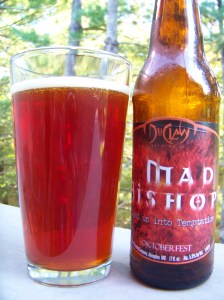
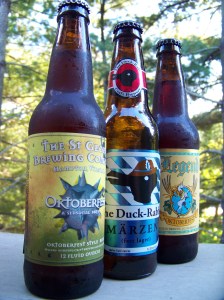
There are quite a few solid Oktoberfest style beers out there, both in imported German and in American craft versions. To me, the season would not be the same without Paulaner’s Oktoberfest Lager. Other great German examples include versions by Ayinger, Hacker Pschorr, Hofbrau, and of course Spaten. On a more domestic note, this year, I just might have a new favorite in DuClaw Brewing’s (Bel Air, Maryland) Mad Bishop Oktoberfest, which I thought was exceptional from the first sip. Other annual favorites include Legend’s (Richmond, Va) and St. George’s (Hampton, Va) Oktoberfests, Duck Rabbit’s (North Carolina) Marzen lager, and Brooklyn Brewing’s Oktoberfest.
Posted in The Road Map - One Guide To Better Beer, Style by Style.

 For those of us who aren’t necessarily “artists” of one kind or another, our enjoyment of others who are and the fruits of their labor often shows up in easy to understand but completely non verbal signs – most often, at least for me, in those unmistakable wide grins of sweet satisfaction that simply say “oh my – this is good”. Long before I became interested in well crafted beer, a deeply gratifying love of good music, especially performed in live settings, had made its home in my soul, and continues to give me immense happiness (and wide grins) today. From this love of good music I learned I have this innate joy that is sparked by so many things that, like good music, have been created out of one’s passion for their art. Personally, when it comes down to it, I know music is still the one that gives me the greatest joy – very little compares to seeing a group of accomplished musicians create joy from music, right on stage in front of you.
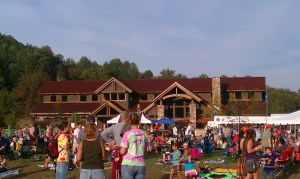 Lucky me then, and anyone else with a like mind and wide grin, that it seems that holding concerts and music festivals at craft breweries around the country is a growing trend. This past weekend, I made it to the second annual “Festy”, a music festival held on the grounds right at Devils Backbone Brewing in Virginia’s Nelson County. Technically, the Festy is a three day celebration of music, outdoor living, and environmental sustenance rolled into what goes by “The Festy Experience”, so to label it as only a music festival is a little misleading, but I was definitely there for the tunes. I readily admit to being a big fan of The Infamous Stringdusters, the band which started the festival last year and of course headlines it, and couldn’t wait for their own sets Saturday and Sunday night. But I knew some of the other bands quite well, and of course, living less than two hours from the location, and having written about Devils Backbone before, knew I was in for some outstanding beer as well.
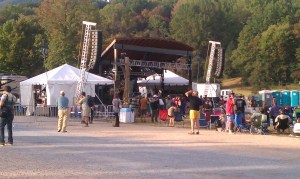 The beer was exceptional, of course, and my current favorite, a Scotch Ale called Ale of Fergus, made numerous appearances during my weekend. There was even a very good pale ale simply named Stringduster Ale, I assume named for the band and produced for the event. As for the entire festival, it was, of course, a blast. The combination of mild, early fall days that slid effortlessly into evenings with the right amount of crisp chill and the breathtaking mountains to every side whose peaks had just begun to lean towards autumn reds and yellows surrounded the concert grounds, the stage, the crowd, and the tremendous musicians who were there with calming and humbling natural beauty. When I found myself in the crowd, as with any time I’m at such a show, I made sure I looked around occasionally, soaking all of it in (and yes, with mighty fine ale in hand). I especially did so during the Stringdusters’ nightly shows. As the band tore through its sets both nights, I glanced around at others near me from time to time. Nothing needed to be said, the emotion was understood. From the amazing sounds of the musicians to the natural artwork of the land around us, it was on every face, where nothing but looks of sweet satisfaction could be seen – punctuated by wide grins of joy that simply said “oh my – this, this is good”.
 Perhaps the biggest surprise to anyone new to craft beer is the beer itself. What before seemed to only exist in a couple different “kinds”, now reveals itself as something that throughout its long history has been produced in dozens of different styles. Here in the United States, so many of these styles gradually disappeared from the beer landscape as the surviving breweries, post Prohibition, began to focus on one, pretty narrow definition of beer – basically, a yellowish, pale lager so commonly found even today. We owe so much then, to those early American craft brewers who were just getting started in the early eighties, because they were passionate about not only producing quality beer but wanted to resurrect many of the styles that had become lost in America over the years. Today, we walk in craft beer stores, grocery stores, or sit down at our favorite pub, and due to the craft beer movement started by them, see so many styles represented once again, as today’s craft brewers continue to create their own interpretations. Variety is the spice of life, as they say, and it’s also at the center of beer as well. But back to our newcomer to craft beer, and their curiosity – with so many styles and kinds of beer to try, how does one begin to explore them? How do we figure out what we like, what we might not, and what to try more of?
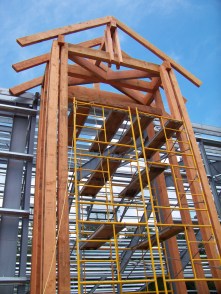 The line of curious, would be beer tasters at the Devils Backbone Brewing Company tent during this year’s Microfestivus beer festival in Roanoke was hard to miss. True, as beer festivals move from early afternoon to late, beer lines inevitably grow as well, as anyone who’s waited (and waited, and waited) in those lines will tell you. But this one had plenty of folks lining up early on, and for good reason. Of course the brewery brought their award winning brews for tasting. But the brewery was generating plenty of buzz for another reason, which was hard to miss too. Under the brewery’s tasting tent, nearly taking up one full side of the front table, stood a large full color diagram of the floor plans for the brewery’s expansion plans, a production facility called the “Outpost”, currently under construction just north of Lexington. Building upon the success of their award winning beers – medals earned at last year’s World Beer Cup, as well as the honor of being named Champion Brewery in the Small Brewpub category are just a few examples – Devils Backbone is earning quite a name for itself within Virginia’s borders, and causing quite a bit of stir – and why not? Who doesn’t love a local, or in this case, regional, feel good success story?
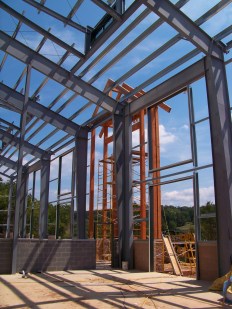 charm of the brewery, not to mention the darn good beer. Located less than two hours from Roanoke in picturesque Nelson County, Devils Backbone (DBB) resides at the base of Wintergreen Resort, in a gorgeous, cozy, ski lodge style building. According to Hayes Humphreys, Chief Operating Officer for DBB, this location will continue to brew beer, although it may serve more of a “research and development” role, much the way Dogfish Head’s original Rehoboth Beach (DE) location does for that now famous brewery. The production facility near Lexington, which will also feature a tasting room, will primarily focus at first on more of the brewery’s core beers. Large windows will give tasting room visitors a look at the production of the beer, and the exterior of the building promises to look a little less like a beer production facility and more like a natural fit for the Rockbridge County country side, likely mirroring the look of the Nelson County location.
 The brewery is also dedicated to staying close to their fans, even during – especially during – this time of growth. According to Humphreys, the brewery is committed to making connections within areas of distribution slowly, instead of simply pushing beer out to just anywhere they can without folks in those areas being familiar with their brews. Upcoming tasting events are being planned which will give them the opportunity to do just that as they lead up to the opening of the Outpost facility. Events such as this are good news for the craft beer curious in the area, especially if you haven’t had a taste of DBB’s beer.


 The Beer Road