Summer of Sours: The Gose

•July 24, 2015 • Leave a Comment

wpid-20150709_153023.jpgWestbrook Brewing of Charleston, SC, is known for making several excellent beers.  Their Mexican Cake Imperial Stout is highly sought after throughout much of the country, their Citrus Ninja Exchange is a healthily respected IPA, and their barrel aged “Old Time” Belgian Dark Ale series and Bearded Farmer line up of Saisons are well thought of.  Even their One Claw, a more year round beer, is considered very tasty and highly crushable.  So a couple years ago, when a friend of mine announced his plan of beer acquisition for an upcoming visit to Westbrook included bringing back as much of one beer – one beer – as possible, his strategy seemed to be, at the least, a little short sighted.  Then, I found out which beer, and I had to question his state of mind.  My friend’s master plan was to bring back as much of their Gose as possible.  Their Gose.  An unassuming looking, slightly cloudy, sour wheat beer with roots in old world Germany.  At the time, it seemed a little like sitting down at the best steakhouse in town and intending to order the house salad.  Later that same summer, after having the good luck to finally get a taste of this deceptively simple beer, I thought of my friend’s one beer plan.  After one sip, it made perfect sense.

The latest old world style to enjoy a resurrection by this country’s craft breweries, the Gose (pronounced Gose-‘uh’) is a member of a family of sour wheat beers from Germany.  Think of it as a cousin of the Berliner Weisse.  Once spontaneously fermented and most likely highly sour, today’s examples are soured through various methods but it’s likely they are not nearly as tart as the old world versions.  The traditional addition of salt and coriander has survived though, and the cloudy, part wheat, part barley ale typically sports a pale yellowish, slightly orangy color that shines like the sun through the haze on a ninety degree day at the beach.  It’s what somehow makes the Gose look like a perfect warm weather beer, just as my friend knew those couple years ago.  But it’s their light, slightly lemony, citrus wheat beer taste, balanced out by the salt, make them surprisingly thirst quenching and a perfect match for any warm day.  For the record, you may also detect a light mineral like or white breadiness to them as well.  Also in their corner is their relatively low abv (usually in the 4 to 4.5% range), which makes them easy to put down when the sun is beating down on you from above.
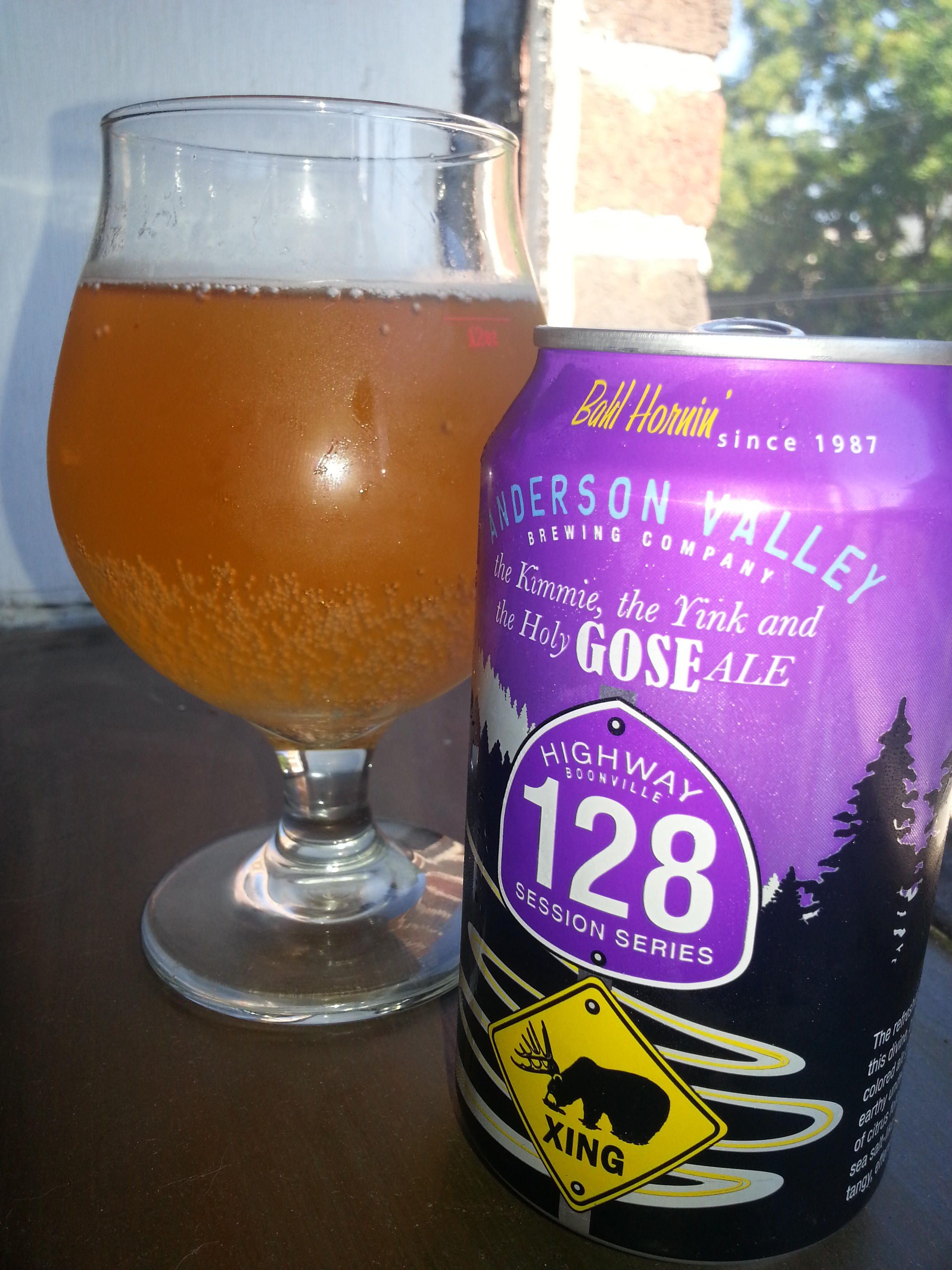
wpid-20140825_175133.jpgAs far as examples go, not much makes it past Westbrook’s Gose.  If you can get it, it is an excellent example of an American, craft brewed version.  Other examples include California’s Anderson Valley Brewing “The Kimmie, The Yink, & The Holy Gose”, released in the last year or so.  Chicago’s Off Color Brewing makes a fine example with their “Troublesome” Gose as well.  Here locally, Parkway Brewing Company very recently released their “Gose Both Ways”.

Of course, American breweries weren’t going to stop at attempts to simply recreate their own versions of the Gose.  Additional ingredients designed to compliment the sour, salty nature of the Gose were bound to come.  Anderson Valley followed up their more standard version of the ale with their Blood Orange Gose, Boulevard Brewing released their tasty Hibiscus Gose (sea salt and hibiscus flowers) and earlier this year, Victory Brewing released their insanely easy to drink and delicious Kirsch Gose, using additions of cherries and cherry juice in the beer.

A few days ago, I returned from a trip to the beach.  Five days of sand, sun, and high eighty degree temps made for a perfect summer getaway.  On the first day there, with chair firmly planted in the sand, I opened the cooler to pull a Westbrook Gose out of the ice.  Needless to say, I thought of my friend’s plan – and how well I was following it this time around.



Beer Updates For Tonight’s Christmas In July at Blue 5 (7/17)

•July 17, 2015 • Leave a Comment

Dry Irish StoutAs if you needed another reason to attend Blue 5’s Christmas In July celebration of typically cooler weather beers, which is kicking off tonight (July 17th) at 5:00, here is just a bit of an update to those beers I listed a couple days ago that will be likely also making an appearance:

Stone WOOtstout 3.0 – The latest installment of the collaboration beer from Stone Brewing and friends.  This version of the immense Imperial Stout was once again brewed with cocoa, pecans, wheat and rye, with the twist that part of last year’s version was actually blended into this year’s.

Harviestoun Brewery Old Engine Oil English Porter – lives up to the name in appearance, is deliciously slick, with big roasty and coffee flavors and aromas.  If you’ve never had it, do not pass it up.

JW Lees 25th Anniversary Harvest Ale – English Barleywine.  Again, if you’ve never had any from this line of barleywines before, it will be an experience to savor.  Incredibly smooth and yes, fairly sweet, but you’ll easily forgive the beer for that due to its immense complexity and depth of flavors.

Hardywood Park’s Bourbon Barrel Aged Chocoate Raspberry Stout, made with “loads of chocolate malt, cocoa nibs, and late harvest” raspberries.

Here are the rest, including the ones I listed a couple days ago, in no particular order:  Hardywood Park’s Gingerbread Stout (aged), Foothills Sexual Chocolate Imperial Stout, Ballast Point’s Sea Monster Imperial Stout, Rogue Brewing’s (2013) Double Chocolate Stout, Schlafly’s Chocolate Milk Stout and Christmas Ale, Avery’s The Beast (2013 version), Sunken City’s Barrel Aged John Henry’s Hammer Imperial Stout, New Holland Dragon’s Milk Bourbon barrel aged Imperial Stout, and Southern Tier’s Warlock Imperial Stout brewed with Pumpkin.

Cheers to stout “season” in July!

Blue 5’s Annual Christmas In July – This Friday!

•July 15, 2015 • Leave a Comment

Blue 5 RestaurantStill deeply entrenched in my memory is a beer I had ten months ago, almost to the day.  Ten months.  Now, I’m not one to say that I usually favor one ‘style’ of beer over another.  And of course, I can appreciate any well crafted beer, and I enjoy a big stout as much as the next person.  But generally speaking, when I take a look what’s in the fridge most of the time, it’s pretty clear I’m mostly about IPAs, or lately, maybe sours.  But give me a couple minutes and I’ll tell you just how mind blowing that beer was that I had ten months ago.  And it was – most definitely – a stout.

Which is not too surprising, really.  Big, rich, boisterous stouts often hold the ability to linger on the palate and therefore in the memory, which is probably why Blue 5’s “Christmas In July” summer celebration of all things stout (and other dark beer) is arguably the downtown restaurant’s most popular event throughout the year.  As in past years, on tap will be several stouts, porters, or even holiday seasonal beers.  Just a few of the beers scheduled to make an appearance this time around will be Hardywood Park’s Gingerbread Stout, Rogue’s Double Chocolate Stout, and Foothills’ Sexual Chocolate.  Also available will be one of my own personal favorites, Ballast Point’s Sea Monster Imperial Stout.

A few of the beers that will be available have been put away for some time, as bigger stouts often age wonderfully.  According to the restaurant’s Facebook page for example, the Rogue Double Chocolate is from 2013, which brings me back to that particular beer from months ago.  It was a year old Bell’s Expedition Stout, which provided me with one of the best tasting experiences I’ve had to date – and easily one of the most memorable.

The event starts at 5:30 this Friday, July the 17th.

Summer of Sours: The Berliner Weisse

•June 19, 2015 • Leave a Comment

wpid-20150619_114739.jpg

After years of apartment living, my wife and I have a yard again.  Our own real yard, our own real grass, and even some nicely done landscaping which I admit we completely, totally inherited.  And best of all, there’s a real patio from which to gaze upon it all.

Of course, this real yard requires real mowing as well.  This is perfectly fine by me, because it makes for a bit of a workout and I enjoy doing it, although I’m not sure it’s as much about the exercise as it is the required post lawn mowing beer.  Now I’ll admit to some personal indecisiveness over the years when it comes down to my personal go-to beer style for the sweat through your shirt, warm weather, beach cooler, and now, post lawn mowing beer.  And if you’ve read this blog at all, you know that I’m not a big fan of the term ‘seasonal’.  But sometimes a particular kind of beer just fits the given situation like a glove.  For times such as these, I’ve tried IPAs, Ambers ales, Pilsners, and plenty of others.  Who knew, then, that for the first time that I tackled the yard, what really hit the spot was a Berliner Weisse style beer – a low abv, centuries old, sour wheat ale from Germany with (of course) with that typical cloudy, white pale, wheat beer like appearance to have inspired such beer names as Tropic Sneeze.

But when you truly taste a good example of one, the ability to quench my thirst makes plenty of sense.  For someone who’s never tried a Berliner Weisse, the common, easy fit description is that it tastes a bit like lemonade (without the sweetness) from its sour tartness and acidic nature.  And in many examples, the tartness can snap your head back a bit.  Nevertheless, these beers can be very refreshing, just like lemonade might be.

If you read this blog at all, you’ll probably know that I am a big fan of the beer blog Shut Up About Barclay Perkins, by beer historian Ronald Pattinson.  If you’re interested in where beer has come ‘from’ through the years, his posts are filled to the brim with great info, and more importantly than anything, he is a staunch believer in going to original sources for beer history.  I’ve read through several of his posts about Berliner Weisse, and along with some of my thoughts that are hopefully fairly accurate on the style, here are a few points I gathered up:

German Weissebier in its various forms as we have come to know them now has been made for centuries.  (So should you still think that sour wheat beers such as this are some sort of American made, craft beer madness, beers like the Berliner Weisse predated Pilsners.)  They are part of a small family of sour wheat ‘styles’ of mostly German heritage, which would include the Gose as well.

At different times during its history, Berliner Weisse was likely made with smoked malt, which continued up through the mid 19th century, before enjoying the same success other styles had in using a paler, “cleaner” tasting malt.  This may explain for some American craft brewers making the occasional sour wheat beer with smoked malt lately – Deschutes has a brewpub only smoked Gose, and Stillwater Artisanal recently released a collaboration beer called Smoke Signals, also a smoked/sour wheat beer.

Just how the bacteria that is responsible for the sour nature of Berliner Weisse got into the beer originally is still somewhat hazy.  But one of the texts quoted on the Barclay Perkins blog mentions the usage of an open – and wooden – cool ship type of container during brewing.  In that particular post, Pattinson wondered if this was the step in which bacteria made it into the beer to begin making it sour.  The manual addition of lactobacillus (bacteria that produces lactic acid) to sour the beer would come into being later, and is of course a common method used today.

There are quite a few other interesting points made in Pattinson’s research, of course.  They include that for a large portion of its history, Berliner Weissbier was delivered relatively young directly to pub owners for bottling and the fact that the beer can actually age quite well, which came as a complete surprise to me.  There are plenty of other points, and if you’re curious, I strongly urge you to check out some of the blog posts that I did.

I suppose that no post about Berliner Weisse would be complete without a mention of the traditional use of flavored syrups that some folks put in their beer to help cut their sourness.  The practice does continue today, with some brewpubs occasionally offering all sorts of fruit and herbal flavored syrups, and some inventive locations even make their own.  But when it comes to the Berliner Weisse style beers being made today by American craft breweries, these syrups seem to have given birth to the great numbers of Berliner Weisse style beers that are bottled today with all sorts of additional ingredients added to them.  Just one example would be Perennial’s good “Hopfentea”, a Berliner Weisse style beer “steeped on a tropical tea blend”.

Here is a breakdown of this often refreshing style, with “just the facts”, followed by a few examples of ones that you might be able to find:

The Berliner Weisse: A lemony tart and somewhat acidic beer, using wheat and barley malts, with a white/pale yellowish color, coming usually in at 4% abv or lower.

Perhaps my favorite go to example so far:

Evil Twin’s Nomader Weisse (can pictured above) – Only its somewhat limited availability and the typically higher than average, Evil Twin pricing would keep me from stocking the fridge with this all summer long.  There’s a near perfect level of lemony tartness and acidity on the tongue that this beer achieves without going completely overboard into face inside out sour territory, and then maintains all the way through drinking it.  Making it even more interesting was a slightly higher mouthfeel than expected.  For a style that sometimes gets slammed for being too one dimensional, Nomader Weisse has more than I’d expect going on, but not enough to detract from its primary tart qualities.

Champion Tart 2Other more mainstream examples are not difficult to find, but some of the easier ones to locate include The Bruery’s Hottenroth, Bell’s Oarsman, and Perennial’s Peach Berliner Weisse.  For a Virginia produced example, Charlottesville’s Champion Brewing is set to release their “Tart” Berliner Weisse in cans in the coming days and weeks.

Of course, any beer with the description “Berliner Weisse style” is certainly a very different creature from one made ages ago.  But we can thank those older examples for their current incarnations nonetheless.  And trust me, I’ll be keeping plenty of them in the fridge this summer, whether I’m working in the yard, or just sitting on the patio looking at it.