
 IPAs, or India Pale Ales, are so popular these days they can seem to dominate the aisles at your local craft beer store. Unfortunately, they are not too often on tap at your local restaurants, a decision no doubt driven by their reputation as a beer that for most, is hard to get “into”. Not true right now at Local Roots Restaurant in Roanoke, as they have once again taken a chance with the Beer Road and let me make another suggestion for something to try on tap there. We went out on a limb a bit, and last week, Stone Brewing’s IPA made its appearance there. Here’s a quick look at the Stone IPA, and followed by a brief overview of IPAs in general.
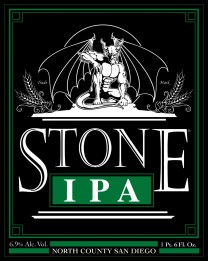 Stone Brewing’s IPA
IPAs, due to their intense hop flavors and accompanying amounts of bitterness, are not usually the easiest beer to get “into”. On the other hand, self proclaimed hop heads, having tossed their trepidation to the wind some time ago, will go on romantically about IPAs as if they’re sharing stories from some road trip that turned out to be one of the best times of their lives. The uncertainty for those new to the style however, is substantial at times. All that needs to be mentioned is that a particular beer is “hoppy”, and crowds at the bar tend to scatter quickly. I’ve often wondered, then, if there is such a thing as an IPA that’s easier than others to ease into, for those curious about such beers. Honestly, I’m not sure if there is such an animal. Sometimes, you have to dive right in.
Stone Brewing’s IPA is that kind of example. No dipping your toe into the water from the edge of the pool here, this is a cannonball right into the deep end, surfacing with a big gasp and feeling refreshed for the experience sort of beer. Take a good breath. There’s no going back after the aroma – it invades your nose, pungent with that wonderful IPA combination of pine and hop oils. It’s a sharp, somewhat bracing experience, and if you’re not used to IPAs and their aromas, they’re different from anything else, and wildly exciting. The taste follows the smell – puckering, sharp flavors of hop oils, some pine, and a side of an almost indescribable citrus wash over your taste buds the way the water does when you didn’t test it, but dove right in. The mouthfeel is barely viscous, and only enhances the flavors – it keeps them there, on your tongue, wanting to be tasted. For what it’s worth, there is a small level of balancing malt sweetness, almost a deep caramel like presence. But it stays over in the corner, talking to itself quietly, slightly afraid of the hops. It’s all bracing at first, but this is what a hop head knows – nothing else is quite like this, like these flavors, this aroma, and yes, while the bitterness is most certainly there, if you can eventually accept that there’s more to beers like this than bitterness, they pull you in and keep you there. If you’re curious about IPAs, I’m not sure there is such a thing as a toe dip into the water – so a beer like this one is perhaps as good a measuring stick as any. For the lover of hopped up beers, IPAs like this can be beer nirvana – the top of the mountain, after the long climb up. For some, the trek is too much. For others, the view from here is nothing short of mind blowing.
 IPAs, India Pale Ales. No beer elicits as intense a reaction as they do. Every fan has their own top ten list of favorites, and every non believer generally shudders at the thought of a single sip. The mere mention of an IPA, or of the consensus first descriptive term most anyone will use to describe one – as “hoppy” – and just watch how faces curl up, generating facial contortions worth of posting on You Tube. Tied more closely to hops than perhaps any other beer, they are probably the most misunderstood beer out there as well, an side effect of the hop’s unfortunate, and partially incorrect, reputation as a component of beer that adds only bitterness. True, IPAs are indebted to hops for much of their trademark taste, a result of the conscious overuse of the hops’ built in preservative qualities while the beer was being shipped by 19th century English brewers to colonies in India and elsewhere. And true, the most basic function hops have is to balance out what would otherwise be dominated by the other primary ingredient, the kilned malt, or barley in the beer. Yes, this balancing act is carried out by the bitter flavor hops impart to beer, as you’ve probably read before. Here, of course, is where the grand misunderstanding starts. The equation usually goes like this: a high level of hops, or a “hoppy” beer, equals bitterness, and bitterness equals, well, for most folks, something bad.
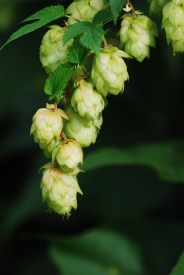 Oh, and how things can change once you get past that. An acquired taste for most folks to be sure, but once acquired, it can be very difficult to look back. Beers such as IPAs tend to give one an even newer appreciation for well made beer, regardless of where their tastes lay before. A fascination develops over just how such flavors can be coaxed from such an seemingly innocuous little plant, and the soon the adventure to try more IPAs to taste differences from one to the next is on. Chances are, once you get past the bitterness, your own top ten list of favorites isn’t far behind. Not to mention that coming to appreciate a “hopped” up beer like most IPAs are is somewhat of a rite of passage for some. Sort of like some adult scout beer badge, but instead of figuring out how to rub sticks together to start a fire, you’ve survived an IPA with a rating of 90+ IBUs (International Bitterness Units). Wilderness survival tactics sound useful, but I’ll take the beer. Eventually, you won’t wonder why anyone might want to be called a hophead, you may proudly go by the name yourself. Oh, and your previously scrunched up face? Once a favorite or two are found, and poured into your glass, it’ll soon turn into a look of absolute pleased satisfaction, tasting even better from the fact that you earned it.
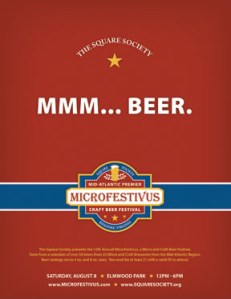 Craft beer festivals. What may seem like just a whole bunch of beer all in one place to a non beer person, holds so much more potential to those of us who are curious about craft beer. Today, there are more and more of us around. Nationwide, there’s a buzz (no pun intended) around craft beer that seems to be growing exponentially. You’ve seen it. Certainly even here in Roanoke. Beer lists at restaurants are now more diverse than ever. Check the tap handles the next time you’re somewhere out and about in Roanoke at a bar or restaurant – is that, is that, a dragon on one? I think there’s a miniature Monticello on another. What’s up with that?


 The Beer Road