 It may sometimes seem the latest buzz in craft beer circles often revolves around the biggest beer to hit the market. It could be the most flavorful, big time coffee stout that you’ve never heard of, or perhaps the newest, palate-decimating double IPA. Although craft beer fans are well versed in other styles, the headlines seem to rarely reflect news about some of the, let’s say, more “common” styles, regardless of how good they can be. It’s not that you can’t find these beers either, they’re everywhere. This is a good thing of course, a reflection of how craft breweries have always been committed to producing a wide variety of the numerous possible beer styles, in a world where sales and selection are dominated by large brewery beers that reflect only one or two, and vary little in taste from one to another. But some of these styles simply don’t grab the spotlight like others do, though they deserve plenty of recognition nonetheless. I thought I’d give one of them their due. It’s the American Amber Ale, a beer that when done well, makes for a great beer to always have some of in the fridge, and one that varies quite a bit on its own.
This variation in flavor is at the core of the style, making them hard to define but of course, limitless in taste possibilities. Ratebeer.com even goes as far to say that they are a beer “without definition”. Within a world of beer style definitions that are all open to some interpretation, Ambers seem to have only one common characteristic, their reddish color, and even that varies widely from beer to beer. Simply put, any listing of beer style explanations that’s worth its water will point out that they are merely guidelines – there are so many possible decisions a brewer can make when creating a beer, and each decision has an impact on the end product’s taste – and Ambers might be one of the one of the most widely varied of all. Basically, there are few safe, blanket statements with these beers. You wouldn’t be any more accurate in saying that most of these reddish ales taste either one way or another if you tried to say every car of a particular color is great on gas mileage.
 This wide interpretation of the style by brewers may come from a history that also gives these beers a fair amount of street cred. No, they may not be the biggest, most extreme IPA to hit the market this month, but depending which version of the history of early American craft brewers you read, American Amber Ales were one of the first styles to be developed by those early craft pioneers. For example, mention Mendocino Brewing’s “Red Tail Ale” in some circles and you can elicit the same kind of hushed speaking and reverential description as if you were talking about some long lost historical artifact only heard of in legends and late night campfire stories.
But there’s more than old school respect behind these beers. The history behind these ales might also explain their wide ranging flavors and variety in how they taste. Like so many American styles of beer, the American Amber Ale is an interpretation of a European one. In this case it was the English Pale Ale, a style with a flavor profile that is fairly well balanced between the characteristics the malted grain gives the beer and the bitterness the hops add. English Pales were basically a scaled back version of the much more hopped up India Pale Ale, in which the high hopping rates were necessary to help it survive long overseas journeys to British colonies abroad. When these brewers began trying to sell their beers on the home front to English drinkers, their bitterness apparently caused some backlash, and was backed down to a much more appeasing level, creating the more balanced style that became the English Pale. When American craft brewers set out to brew their versions of the style, they also looked for a certain amount of balance between the two. They also put a decidedly American stamp on the style. Either from the lack of available English style ingredients to duplicate the English Pale, especially when it came to the hops, or from an outright desire to make their new ales a decidedly American beer, brewers soon began using only American bred hop varieties. These early interpretations, with the inclusion of solely American ingredients, created a large, new beer style that to this day encompasses so many individual beers in which the flavor can vary so much from one to the next. And while it might seem odd at first, it is within the typically balanced flavor of the interpreted style that the American version owes so much beer to beer variation to.
 The “balance” of flavor in a beer, any beer, can be oversimplified by breaking down its two most basic components – the flavors and any sweetness that come from the malted (kilned, or heated) grain used, and any bitterness and flavors from the hops added. The way this plays out in any beer you taste can either come across like an epic game of tug of war or can present itself as the slightest, most gradual shift in one direction or another, like a patch of sunlight moving slowly across a floor as the afternoon fades towards evening. In some styles, this “balance” really isn’t much balance at all, but that may be what the style calls for; one component is more dominant, and its presence is more like a slam dunk over the other. But in a beer that was originally well balanced between the two, it becomes obvious how each brewer’s own interpretation might yield a beer that tastes very different from the next – by tipping the scale for their own ale in one direction or the other, the possibilities are endless.
It is true that the use of a particular kind of malted grain, called “crystal malt”, can lean many of these ales towards a sweeter flavor, and also gives them their medium to full body and their distinctive range of reddish, amber, and orange-ish colors. Typical flavors that come out of the malt used in these beers can be of toasted grain, brown bread, toffee, or a full on caramel. Well done examples that show off these kinds of flavors are Bells Brewing’s Amber, Full Sail’s Amber Ale, and New Belgium’s Fat Tire. But there are also flavor characteristics and bitterness from the hops added to Amber Ales, which can range from medium to high levels. The shifts between the malt and hop flavors can move either just barely or much more decidedly, and of course each beer reflects it in the final taste. It is within these sometimes slight and other times obvious shifts in balance that so many variations can come out of one beer ”style”. It’s also a great example of how even attempting to categorize a single beer as one style or another can be pretty difficult, often seeming pointless at times.
 All these possible variations might seem like choosing one to try would be difficult. Add in the fact that some Ambers do have varying amounts of bitterness due the brewer’s hop additions, and some folks can be skittish about any detectable bitterness in beer. Just remember that well done Amber Ales are still well balanced beers. Good examples include Anderson Valley’s Boont Amber, Lagunitas’ Lucky 13, North Coast’s Red Seal, and Nectar Ales’ Red Nectar. But in case you do tend to think only of bitterness and the onset of facial contortions when you hear the word “Hops”, remember, hops add more than bitterness to beer. Most of the hop varieties used in Ambers add a bit of citrus character to the beer. We’re also talking about variety and complexity here, too, which is probably why you are curious about craft beer in the first place. Variation and differences from one beer to the next might seem confusing at first. But as I’ve written before, this is the part of the fun of well crafted beer. Finding a beer or a style that you like, learning from it, and using that to both figure out what flavor characteristics you truly care for and eventually, pushing the boundaries into ones you perhaps weren’t always fond of is one of the absolute joys of craft beer. Developing a taste for the subtle differences and complexities in beers such as these is also where true appreciation for what brewers can do begins. Of course, it also means that you have to get out and actually taste different ones to see where your likes are, a situation I have always fondly referred to as “research”. After all, you weren’t really thinking that tasting a bunch of good beer was going to be a problem….right?
American Amber Ales may not often be the latest hot topic among craft beer internet discussion boards. They may not steal headlines from whatever the latest seasonal is, or the beer with the largest, most intense bitterness rating. They may not be the most “killer ipa”, or the most delicious Russian Imperial 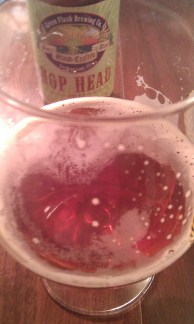 Stout to ever grace a pint glass. But with their wide variety of flavors, they are excellent and endless examples of what a brewer can do with the fine balance between malt and hop. They are also usually low in alcohol level, making them a great beer to have around for an afternoon or evening with friends. They can be surprisingly complex and easy to drink at the same time – something to have in the fridge for any day. With the slight differences from one to another, they are also a great beer to feel out one’s “likes” in beer, and also one to perhaps use to push your flavor boundaries with. Extreme hop bitterness is rare in Ambers, which make them less scary to those still feeling out what the little cone like plant can do for a beer. No, they may not be the centerfold layout for craft beer, but all of these reasons make them an excellent place to begin one’s own craft beer road.
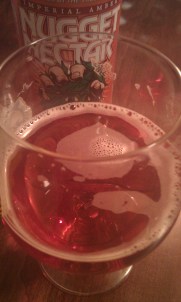
Other great examples: Green Flash Brewing’s Hop Head (definitely moving towards higher bitterness, as if the name didn’t warn you), Bear Republic’s Red Rocket Ale (excellent balance, each sip shows something different), Stone’s Levitation Ale (also well balanced). Sidenote – there are some Amber Ales that are higher in alcohol content, earning them the “Imperial” label. These are often well balanced but with simply bigger flavors than the more common Ambers have. Due to this, their higher alcohol level, and their typically higher hopping rates, they can blur the lines, and compare well to India Pale Ales. Examples of these are Troeg’s Nugget Nectar and Terrapin Brewing’s Big Hoppy Monster.
Posted in The Road Map - One Guide To Better Beer, Style by Style.

 Some of us lucky folks here in central and southwestern Virginia have gotten a couple of early, sweet tastes of spring weather lately. When temperatures reached into the seventies and eighties for a teasing couple of days recently, my thoughts inevitably turned to the promise of permanent warm weather, plenty of sunshine, and nights mild enough to be able to sit outside well past dark comfortably. (Yes, I do believe I was accompanied by friends and some wonderful beer.) Even though the warmth seems to be on another hiatus, these days are definitely ahead. For beer curious types like myself, and if you’re reading this blog, you too – this also means another season is heating up – the beer festival season. This is wonderful news, of course. As I’ve written before, festivals offer at least one simple opportunity – which is as golden as the summer days we have started to long for – the chance to try good, craft beer that you haven’t had before. Tomorrow, All About Beer Magazine will be holding one of their four annual World Beer Festivals, in Raleigh, NC. In case you hadn’t sensed it yet, yes, my bags are packed.
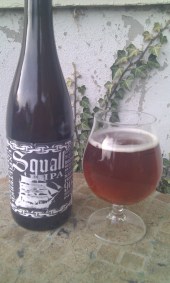 Wine connoisseurs. What just came to mind? Was it someone with a freshly poured glass of red wine, spending as much time smelling it as tasting it? If you don’t count yourself as one of these folks, you might not completely understand what the big deal is. Just drink the wine, you say. Or perhaps you do understand, and even if you’re not much of a fan of wine, you concede that part of the enjoyment of a glass of good wine could lie in the aroma. You’d be right, of course. But I imagine you’re reading this blog because you’re curious about a glass of good beer, so here’s how this applies to you. It’s also how you really get some of those wine connoisseurs going. Tell them there’s as much to aroma in beer as their glass of wine. Understandably, you may not have a wine-only connoisseur handy right now, but just imagine the look on their face. Care to guess who is being misunderstood now?
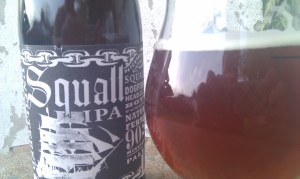 At their most basic level, two primary characteristics are considered when talking hops – bitterness and aroma. There are countless lists of hop varieties on the internet, and each one very succinctly notes each hop’s aroma and “bittering” capabilities. Adding the balancing bitterness to a beer is somewhat straightforward – during the step in brewing beer as the beer is being boiled, “alpha acids” within the hops convert and add the necessary bitterness to the recipe. As far the importance of aroma, you only need to visit most any brewery. Often during a tour, someone from the brewery will hand you a couple of dried, whole flower hops and instruct you to rub them together in your hand, then smell. The aroma is unlike anything you might have smelled before – distinctive, pungent, with flowery, grassy, citrusy or pine like characteristics. These aromas come from essential oils within the hop, but when the hops are added during the boil for bittering, these oils actually evaporate, and any affect on aroma is lost. To add aroma, hops are again added towards the end of the boiling process, as temperature drops, and in many beers, are also added during the fermentation process as well, a process known as “dry hopping”. Adding them towards the end of the boil means that some hop flavor will survive to be a part of the final beer. Dry hopping is also an excellent way to give any beer plenty of hop aroma without adding much, if any, additional bitterness. By the way, my Dogfish Head Squall, according to the brewery, is dry hopped with no less than four different varieties of hops.
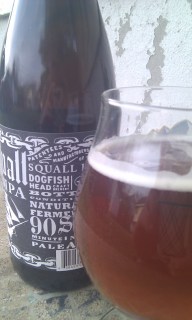 Without a doubt, good, craft beer is designed to be a total sensory experience. Craft brewers are often described as part artist, part scientist, and beers like the one in my glass that day only seem to prove both ends of the equation. Taste and flavor is only part of the story, and as it turns out, owe a lot to the smells and aromas worked into good beer. And yes, just as there are red and white wine glasses, there are glasses designed to help bring out a beer’s aroma as well. Some beer styles do perhaps exhibit more complex aromas than others – Pale Ales, India Pale Ales, most Belgian styles, and generally “hoppier” beers are some good examples. But the next time you have a good beer in your hand, go ahead, hover that nose over it and enjoy. While you do, think about a wine only fan that you might know too, and how they might wrinkle theirs at the idea. You and I will keep how much we enjoy the aromas to ourselves.


 The Beer Road