 “There are three things I have learned never to discuss with people: religion, politics, and the Great Pumpkin.” These now famous words are uttered by Charlie Brown pal Linus as he anxiously awaits the arrival of his imaginary hero each fall. And each year, poor Linus is disappointed as this supposed giant flying pumpkin fails to show, and he must again face ridicule from friends who cannot believe such an event can possibly happen. Each fall, beer enthusiasts await the arrival of a different kind of great pumpkin as well, but hardly have to hide their joy from one another. Of course, this is not the arrival of a giant flying pumpkin coming to deliver presents to deserving kids, and that might have something to do with it. (Not that pumpkin ale lovers have any less enthusiasm for their arrival than Linus does for The Great Pumpkin, it’s just that they can discuss their arrival openly.) These are pumpkin ales, arriving in bottled form, and their landing on shelves just about wherever you look. Each year, pumpkin beers seem to grow in popularity and recognition – at this year’s Great American Beer Festival, widely considered the nation’s most prestigious beer festival, pumpkin beers won Gold, Silver, and Bronze medals in the Field Beer (beers with any sort of vegetable added) category, a sweeping win that is hardly worth any ridicule.
At first glance, it might seem that such beers are perhaps a fad, a beer to take advantage of those who enjoy tasting something a little different and also absolutely cannot wait for the arrival of the fall season, and seem to go a little nuts at the first appearance of the round orange gourd. Look around, after all – there are pumpkins everywhere. They are outside every grocery store, on everyone’s front porch, and there’s most likely a pick your own event happening nearby you today. But beers with pumpkin used in the brewing process are far from fad. While tracking down actual ale recipes from colonial times can be somewhat difficult to do, it is known that brewers during those times used a variety of items to either flavor or create beer, since barley was simply not available to colonists at the time. One of the items used in its place was, in fact, pumpkin. There are some articles in beer history documents that reference Ben Franklin himself using pumpkin to produce beer.
These days, pumpkin is often diced up and added to the beer during early brewing stages to extract its flavor. For most of these ales though, it isn’t the pumpkin itself that adds the greatest amount of taste to these beers. Along with the actual pumpkin, breweries use a variety of spices – ones that you would find in pumpkin pies, of course, to flavor the final product. Nutmeg, allspice, cardamom and clove are all common, and depending on which ale you taste, you can find varying levels of spice from beer to beer. Some spice levels can be somewhat high, while others seem to let the spices run just underneath the overall flavor of the beer. Pumpkin ales can also be somewhat sweet, with a fair amount of malt used. No matter what, hop levels and any bitterness from the hops are low to just about non-existent. Many folks will tell you that even though they may enjoy pumpkin ales, due to the spices, it can be difficult to enjoy more than one or two at the most at one sitting. In my opinion, that can be pretty accurate. However, some of the pumpkin ales out there let all the flavors mesh together quite well, and let the added flavors accent the beer instead of being front and center. These can be highly and surprisingly drinkable.
 With pumpkin ales becoming seemingly more popular each year, there are plenty to chose from and try. Is it possible that among fall seasonal, the pumpkin might replace the legendary Oktoberfest as the most popular? That one is definitely up for debate, and perhaps several seasons away to tell. But no matter where you go, you’ll likely find at least a couple on the shelf to pick up and taste, and on a cool fall day, take my word for it – they do seem to feel a bit fitting, as the leaves are swirling around outside and the trees begin to put on their annual show of colors. As with most seasonal beers, they are only out for a limited time, and with us well into October, their time is unfortunately already running out. I found that the Pumpkins I tasted which didn’t hit you completely over the head with spice levels or tasted too terribly much like pumpkin pie, but more like a good beer with some the typically used spices in it, were the most delicious and by far the easiest to drink. At any rate, the good news is that you shouldn’t feel uncomfortable discussing them with others – they can be very tasty, top notch seasonal beers, and you certainly don’t have to sit up all night in a pumpkin patch to find one either. Here’s a few that should be common in most stores, with a quick run-down of their flavor profiles.
(I must give a big thank you to the Wine Gourmet here in Roanoke for providing me with a chance to taste a lot of these!)
Dogfish Head (DE) Punkin Pumpkin Ale – this is often one of the most commonly found Pumpkin beers, and thankfully so. Punkin finds a very good balance between a luscious sweetness and the added spices, benefitting from an addition of brown sugar. In fact, this is definitely one where the spices are certainly there but do not hit you over the head, instead accenting the overall flavor. Among it’s most likeable characteristics is the body – It has a smooth, almost luxurious mouth feel. And at 7% ABV, there is a definite warming from the alcohol – consider it your own handheld way to warm up while enjoying the briskness of a cool fall day.
Heavy Seas (MD) The Great Pumpkin Imperial Pumpkin Ale – This is another very drinkable pumpkin ale. There is an even level of malt sweetness and the spices are a bit more up front than with some others, with tastes of cinnamon and nutmeg, but again, are not completely overdone. Again, this has a fairly big ABV, coming in at 8%, so it also has a nice warming effect from the alcohol.
New Holland (MI) Ichabod Pumpkin Ale – The pumpkin type spices are certainly present in this one, but without much of a heavy body or overly malty sweetness. Some Pumpkin Ales can be a bit on the heavy side, due to that sticky sweetness, and to some folks, almost seem like a dessert; this one is definitely not, more of a straightforward beer, and even has more of a hop presence than most.
Weyerbacher (PA) Imperial Pumpkin Ale – There is a particular balance in this one between the present pumpkin flavor, spices, caramel like sweetness, and the medium mouthfeel which works very well. To me, similar to the Dogfish Head Punkin, the body is smooth and somewhat velvety, without being heavy, and is one of the nice features of this one. Again, this one is a bit more of a straightforward beer but with solid balance between all the flavors and is very enjoyable.
Shooting Creek Pumpkin Ale – The friendly folks at nearby Floyd County’s Shooting Creek Brewery invited me down for a day when they were bottling this; as of right now this one is perhaps a week or two still from hitting the shelves, but luckily I got a sneak “peak”, or taste, of their version. When it does hit the stores, don’t miss this one either. There is a nice level of malty flavor in the form of yummy, fresh bread, a slightly more noticeable hoppyness than most others I tasted, and the spices, of which nutmeg, cinnamon, and allspice are used, again do not hit you over the head but rather accent the beer very favorably. Basically, all these characteristics have their own room in the beer and work to make for another very drinkable version of the style. Don’t miss this.
Other commonly found Pumpkin Ales are Saranac’s (NY) and Post Road Pumpkin Ale (Brooklyn Brewery, NY). Both are good examples in case you’re out looking for other Pumpkin Ales.
Posted in The Road Map - One Guide To Better Beer, Style by Style.

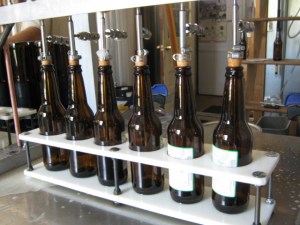 It’s not too late to try what’s becoming one of the most popular seasonal beers, at least if you live in the Roanoke area. While most Pumpkin Ales are on the last days of availability, expect the release of Shooting Creek’s 2010 Pumpkin Ale in the next week or so. Last year’s batch has folks asking for this year’s version already, which I can personally vouch for – it is one of the most enjoyable Pumpkin Ales I tried this fall. The nearby Floyd County brewery was bottling their version of the fall beer about three weeks ago and told me it hoped it have it in stores about now.
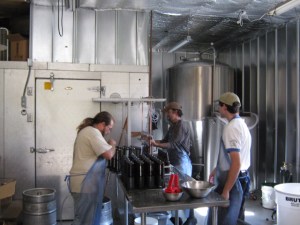 stands out above another, and it all makes for a very drinkable Pumpkin Ale, something that not all of these beers can say for themselves. Many of these have too much of an pumpkin pie taste that tends to overpower all else, and makes for a beer most folks can only have one of before they’re done.
 The word “pale”, by strict definition, can describe something that’s feeble, faint, or lacking in intensity. But don’t let the term fool you when considering the beer style “Pale Ale”, because the style is anything but “pale”, especially when describing the American version. Of course, historically speaking, the term “Pale Ale” refers to the efforts of English brewers who wanted to achieve a lighter colored beer in a time when darker ones, like porters, were the norm, so the term is more about the contrast to what came before. That’s about where the term’s use as an adjective ends, so no thinking that taste is taken for granted. English Pale Ales, usually with less of a hop character and more balanced than the Americanized version can be delicious beers. And the American style? They are often bursting with fresh hop and malt flavor, and with a great many of these ranging into deep amber colors, the term “Pale” as description for a beer’s color even begins to fall a bit short. The Pale Ale was also one of the first major beer styles – perhaps the first – taken on by American craft brewers in an effort to stake a claim in the world of brewing. (And if you’re not sure about that one, consider this: When was the last time you were in a bar and didn’t see a Sierra Nevada Pale Ale tap handle among the choices?) They are a varied style, with wide ranging flavors, aromas and colors, but most of all, a style full of delicious and refreshing flavor.
 True, the term was originally derived when English brewers figured out a way to more evenly roast, or kiln, their malt than before, which resulted in the paler colored beer they were looking for. Before this point, the primary method used to roast the grain was by the burning of wood, a process in which the temperatures were not only difficult to control, which made it difficult to attain a consistent end product, but worse, often resulted in burned, or scorched grain. The resulting overly roasted malt would not only transfer a dark color to the beer but also a rather undesirable overly smoky flavor to the beer. Sometime in the late 17th century however, English brewers began using a coal derivative called “coke” to roast their malt, a method that not only gave them much greater control over the temperatures used in kilning but also resulted in a much “paler” looking roasted grain. Not only did this new malting technique give us the descriptive term “Pale” by which such a beer is neither feeble nor faint, but simply looks different than kilning methods would’ve allowed previously, but turned out to be a brewing breakthrough of pretty epic proportions. Brewers from Europe, hearing of this new, lighter colored malt being produced in Britain, would soon come to England to learn how it was being done. They would return home with the knowledge necessary to produce the beer that now represents more than 90% of all beer brewed in the world – the golden colored, paler-than-before-style known as the lager.
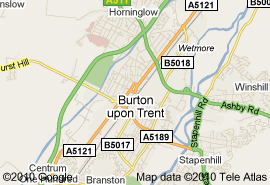 But in England, these Pale Ales began to grow in popularity, primarily as an export item to English troops in India. (As a side note, brewers quickly noticed that they had to more heavily hop and brew higher alcohol level versions of these beers to survive the voyage to India, resulting in what we know as an IPA, or India Pale Ale.) Original brewers of the style had their natural surroundings on their side as well. Most were based around Burton On Trent, where the particularly hard water drew out the hop flavors even more. Interestingly, this is an element of the style’s brewing process that brewers in other parts of the world would soon replicate by directly adding gypsum to water, a process in beer making known as, appropriately, Burtonisation.
 You’ll notice that many of the flavor descriptions leave quite a bit of room for brewers to work in. Hop character, bitterness, as well as malt presence can all range from medium to high. Even the color can be quite different from one to another. In other words, American Pales are another style which is hard to nail down with one definition – as a matter of fact, it’s darn near impossible. Do not despair! Beer styles are always guidelines instead of true, down the line definitions. As always, this really works in the favor of the beer curious – it simply means there’s a ton of different ones out there among these beers, and if one doesn’t suit, another one likely will. The tastiest of this style, to me, are ones with big citrusy hop flavor, decent malt balance, and most of all, just scream freshness. If you have a craft brewery nearby, the next visit should include a taste of their Pale Ale, especially if they’re getting their hops regionally. In my own area, one favorite is indeed a regional beer, the Full Nelson from
  Unless you live in a large metropolitan city, finding craft beer on tap can sometimes feel like you’re on a treasure hunt on par with any Indiana Jones adventure. Thankfully, things are beginning to change, even here in Roanoke. But for the most part, especially if you’re looking for a particular brewery’s beer, or just a selection of more than one or two, you often feel as if you might as well be Indy himself – following a dusty, folded up old treasure map, which leads you to find a hidden door behind a waterfall, and only if you speak the right combination of words to the right person will you find the beer you’re looking for. (By the way, that’s your bartender, and it helps to tip well too.) Some will say that it’s all part of the fun, and honestly, it is. But while craft beer is growing in popularity overall, many bars and restaurants are not yet sold on the idea. Besides, the breweries often keep things fresh by choosing to distribute on a regional basis. Still, sometimes it’s as if you have to travel to the ends of the earth, risking life and limb to find the forbidden drink you seek. Or maybe it’s just that delicious Belgian IPA that you keep hearing about, but whatever.
 But for those living in and around Roanoke, do as I did, whether you have a whip attached to your belt and Sean Connery as your father or not. Get down to Local Roots Restaurant on Grandin Road, because currently Blue Mountain’s “Humpback” Oktoberfest is on tap – yes, on tap – at the restaurant. This is what set me out on my adventure in the first place, after all. This particular Oktoberfest may not hit you over the head with a deeply malt character, as some might, but is malty enough – traditionally so, with tastes of toasted bread or a light caramel flavor, before exposing a herbal-spicy flavor that runs through to the end of each taste. In beer, this kind of spicy like flavor is meant to describe a somewhat sublime and leafy taste. I have run across more than one review that describes this flavor as simply tasting a bit like fall.


 The Beer Road