
Every time a dark beer is poured, there is always that one voice in the crowd eager to exclaim one of beer’s most famous stereotypes – “must be an ale!” or worse, “ I can’t stand ales, I only drink lagers!”. But dark doesn’t always mean the beer is an ale, far from it. Color by itself remains as one of the worst ways to classify a beer – there are beers which are light in color but are ales, and plenty that are dark in appearance but are actually lagers. When my own beer curiosity finally turned down the road of craft beer, it was a dark beer which not only blew me away with its flavor, but with a little research revealed itself to definitely be a lager. It also remains as my favorite version of a beer mythbuster – the German Doppelbock.
Yes, Doppelbocks are lagers – cold fermented, they lack the typical “fruity” or “estery” flavors inherent in most ales. But don’t get me wrong – while such a beer might be useful in disproving beer stereotypes, it’s still the flavor that draws me back to Doppelbocks (or “Doublebock”). I doubt I will ever forget the day I tried my first example of the style. While certainly dark in color, ranging from dark browns to nearly black, Doppelbocks are full of sweet, malty pleasure – flavors include those of dark fruit, such as raisin or prune, or of dark caramel or molasses, but many times taste like the best, freshest dark bread you’ve ever tasted, liquefied and put in a glass. But even though Doppelbocks are more than just a tasty beer – due to their generally sweet, malty flavor profile and a typical alcohol content of usually at least 7.5% (some top out at above 11%!), they are not your everyday beer. I think of good Doppelbocks the way some think of a delicious dessert – they are decadent indulgences, to be sipped and definitely savored.
Depending on which version of the story you read, the style began sometime during the 17th century when German monks began brewing a ‘strong’ beer to quaff during times of fasting, such as Lent, when they were not allowed to partake of any solid food. Today, we jokingly refer to beer sometimes as “liquid bread”, but during those times, these strong brews were exactly that – a substitute for solid foods and something the monks could make from their grains other than, well, bread. Original strong beers were called “bock” beers, and it seems that over the years, the beers got stronger in nature and at some point started to become the style we refer to as the “Doppelbock”, or double bock. The monks who originally began the style were the Paulaners, whose strong beer “Salvator” at one time was a catch all term for Doppelbocks in general. Eventually, they trademarked their Salvator name, and all other beers of the style had to move to something different, yet almost all stuck with placing the suffix “-ator” at the end of their name.
Like the Oktoberfest, the Doppelbock is another German style with which there are several imports you shouldn’t miss. Paulaner’s Salvator remains one of the most well known, but there are others which personally I’ve tasted and are also revered worldwide. Ayinger Brewing’s Celebrator, Weihestephaner’s Korbinian, and the Maximator from Augustiner Brau are world class examples. As far as American craft brewed versions, the one which turned my head not only towards Doublebocks but towards craft beer in general was Troeg’s Troegenator. North Carolina’s The Duck Rabbit Brewery also produces an outstanding version, their Duck-Rabbitor. Others include Victory’s (PA) St. Victorious and Thomas Hooker Brewing’s Liberator. Of course, there are many more as well.
If you haven’t tried a good Doppelbock, you’re in for a treat. This is another German style which is both delicious and one which will warm your heart (and with such high alcohol content, I mean literally). Tasting of yummy malty goodness, and invented for the chilly months of winter, we’re moving towards the time of the year when this kind of beer seems just right. Just remember, don’t let the color make you pass these up.
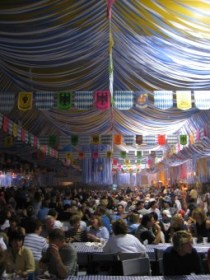 Is there one season of the year which is so closely tied to any one beer style than fall? We find ourselves nearing the end of September, and for so many beer lovers, it is always with a sweet and reassuring sense of joy – like running into an old friend – when they find the Oktoberfest beers have sneaked back onto store shelves. For the next month or so, these beers of German origin which instantly invoke visions of massive parties filled with tipsy stein wielding revelers being served by German beer maids while swaying to oompah bands will be available to enjoy, only to (somewhat) disappear until next year. Stereotypes and truths aside, my own personal better-beer-history owes quite a bit to the Oktoberfest style, as it was one of the first styles that got my taste buds watering for different and better beer. It was an experience I’ve always thought might work well for other beer curious folks. Oktoberfests typically are amber in color, medium to full bodied, have a somewhat rich, toasted malt flavor. When done well, they have an outright delicious taste, are easy to drink brew for anyone who is curious about quality beer.
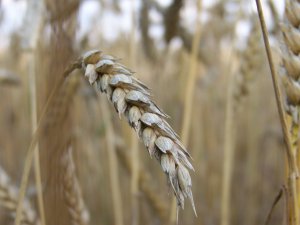 More than five hundred years ago, German brewers began to get a hold on at least how to produce a consistently good beer for their times, if not exactly why a particular result would occur. They knew that beer produced and then stored in colder temperatures would yield just that – a beer with a reliably consistent taste. Beer produced during warmer times was prone to spoilage, and therefore of some hit and miss kinds of flavors, such as sourness. So brewers began working to produce mass quantities of beer in late winter, and then stored the brew often in ice lined caves or other storage areas. Over the spring and summer, the beer was released on an as needed basis. As each summer came to a close and fall began however, the beer that was still left needed to be drunk, as new batches of beer would soon be produced from the summer harvests and would need to be stored in the same casks housing the existing beer. The need to get rid of the beer met the idea of holding a festival to do just that, and the history of the world’s biggest beer festival had been born.
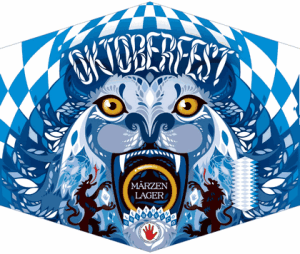 There are plenty of American, craft brewed Oktoberfests though to watch out for as well. Among regional ones that I’ve personally tasted and enjoyed are Legend’s (VA) version and Blue Mountain’s (VA) Humpback Oktoberfest. Other well reviewed examples from BeerAdvocate.com include Left Hand Brewing’s (CO) Oktoberfest and Avery Brewing’s (CO) The Kaiser, both of which are available here in Roanoke, as well as Great Divide’s (CO) The Hoss and Great Lakes (MI) Oktoberfest.


 The Beer Road